
ASSET INSPECTION SURVEILLANCE
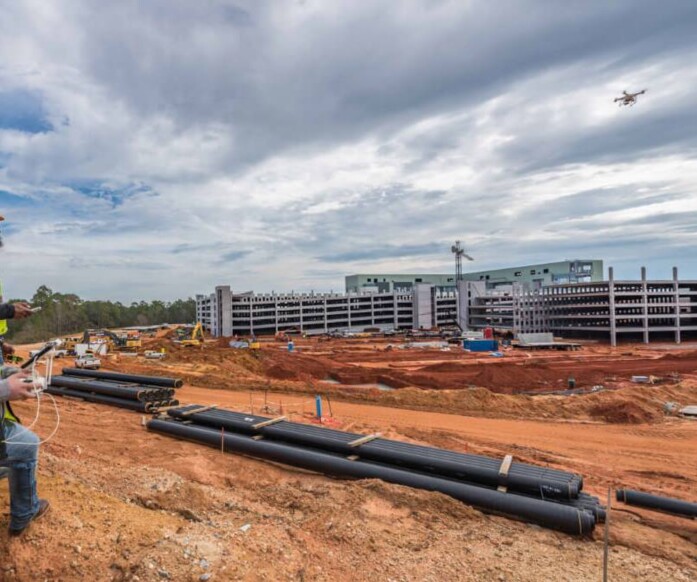
Drones provide a safe, efficient, and cost-effective way to inspect critical assets and infrastructure without interrupting operations.
Equipped with high-resolution cameras, thermal sensors, and real-time data capture, they can detect corrosion, damage, or structural defects long before they become serious problems.
By removing the need for scaffolding or risky manual inspections, drones drastically reduce health and safety risks while providing detailed visual insights. Whether assessing buildings, inspecting power lines, or surveying pipelines and wind turbines, drone inspections deliver accuracy, speed, and reliability — ensuring assets remain well-maintained and operational with minimal downtime.
OUR SERVICE BENEFITS
Benefits include:
Uses of Drones in Asset Inspections
• Infrastructure Inspection: Check bridges, towers, wind turbines, and power lines for corrosion, cracks, or mechanical defects.
• Building & Property Assessment: Examine roofs, facades, and industrial structures safely and efficiently without scaffolding.
• Energy & Utilities Monitoring: Detect heat loss, leaks, or anomalies in pipelines, tanks, and power networks using thermal imaging.
• Construction Progress Tracking: Capture aerial imagery for 3D models, project mapping, and progress verification.
• Surveillance Applications: Monitor large or sensitive areas for security, maintenance, and environmental compliance.
Advantages of Drone Inspections
• Improved Safety: Eliminates the need for personnel to work at height or in hazardous conditions.
• Faster and More Efficient: Covers large areas and performs detailed inspections in a fraction of the time.
• Lower Costs: Reduces the expense of scaffolding, lifts, and extensive manual labour.
• High-Quality Data: Delivers real-time, high-resolution imagery and sensor data for precise analysis.
• Early Fault Detection: Identifies corrosion, cracks, or material fatigue early, preventing costly failures.
• Enhanced Accessibility: Reaches confined or hard-to-access spaces safely and easily.
• Minimal Downtime: Inspections can be completed while assets remain in operation, improving productivity.